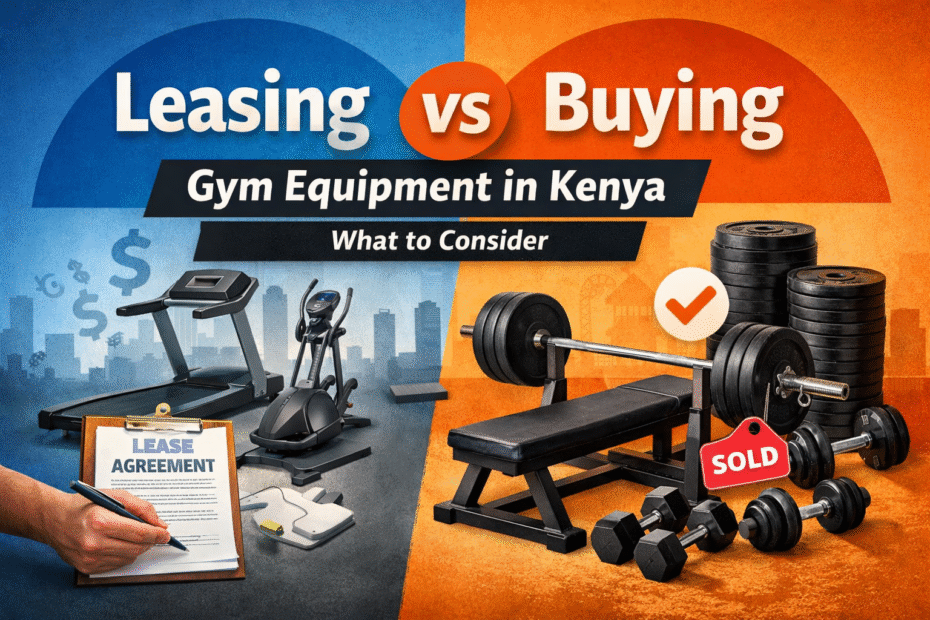
Introduction
For clients setting up or upgrading gym spaces in Nairobi and across Kenya, one of the key decisions is whether to lease or buy gym equipment. The choice affects cash flow, long-term cost, and how the facility is managed over time.
This article outlines the practical differences between leasing and buying, and where each option is more suitable based on project type and usage.
Leasing Gym Equipment
Leasing involves accessing gym equipment over a defined period rather than making a full upfront purchase.
When leasing is suitable
Leasing is generally more suitable where:
- the project is in early stages and requires controlled capital use
- the facility is expected to evolve or upgrade over time
- equipment needs may change based on usage patterns
This is common for:
- apartment gyms
- company wellness spaces
- new commercial fitness facilities
Key considerations
- Lower upfront cost compared to purchasing
- May include maintenance depending on the arrangement
- Equipment can be upgraded or replaced over time
- Does not result in ownership unless a buyout option is included
Limitations
- Total cost over time can be higher than purchasing
- Equipment remains under agreement terms
- Requires commitment over a defined contract period
Buying Gym Equipment
Buying involves full ownership of the equipment from the outset.
When buying is suitable
Buying is generally more suitable where:
- the facility is established or long-term
- equipment needs are clearly defined
- there is capacity for upfront investment
This is common for:
- established gyms
- private home gyms
- facilities using durable equipment over long periods
Key considerations
- Equipment becomes a long-term asset
- Lower total cost over time compared to leasing
- No contractual restrictions once purchased
Limitations
- Higher initial investment
- Full responsibility for maintenance and repairs
- Equipment may require replacement as technology evolves
Equipment Type Matters
The choice between leasing and buying can also depend on the type of equipment.
- High-tech machines (e.g. treadmills, advanced cardio equipment)
→ Leasing can be more practical due to upgrades and technology changes - Durable equipment (e.g. free weights, benches, racks)
→ Buying is often more suitable due to long lifespan and lower risk of obsolescence
Practical Considerations for Clients in Kenya
When deciding between leasing and buying gym equipment in Nairobi or elsewhere in Kenya, it is useful to consider:
- the intended users (residential, commercial, private)
- expected frequency of use
- available budget at setup stage
- long-term plans for the facility
There is no single approach that applies to all projects. In many cases, a combination of leasing and purchasing can also be considered depending on equipment type.
Conclusion
Leasing and buying gym equipment each serve different purposes.
Leasing supports flexibility and lower initial cost, while buying supports long-term ownership and lower overall cost over time. The appropriate option depends on the stage of the project, the type of facility, and how the equipment will be used.
For projects in Nairobi and across Kenya, aligning the decision with both current needs and expected future use is key to setting up a functional and sustainable gym space.
Need guidance on gym equipment decisions?
Zizu Investments supports clients with gym equipment planning, supply, leasing, and setup across Nairobi and Kenya. For guidance on the most suitable approach for your project, you can reach out for consultation.